Editorial Workflows in practice
Explore how teams can coordinate launches, localization, product content, live public guidance, cultural collections, and automated operations in Sanity.
The most valuable workflows begin with a real operating problem: a deadline shared by teams, content that changes as decisions are made, and work that must move between people, systems, and automation without losing context.
These scenarios show how Editorial Workflows can turn that coordination into visible, executable state inside Sanity.
Launch a product across twelve markets
A product launch has one public date, but readiness is distributed. The core story needs approval. Each market needs the right price, claims, language, imagery, and legal terms. Regional teams can move at different speeds, while missing usage rights or an unresolved claim can still stop the release.
Editorial Workflows can create the market work from a shared launch, let content, assets, localization, and specialist review progress in parallel, and bring every required decision back to one release gate. Teams see which market is blocked, who owns the next decision, and what remains before launch.
Translate one source into many local experiences
A company authors product stories, help content, or campaign material in one source language, then adapts it for several markets. Each locale needs translation, regional terminology, local links, imagery, claims, and review. Some markets can publish quickly. Others need specialist input or a deliberate departure from the source.
Editorial Workflows can create a workstream for each locale, preserve local ownership, and show which versions are ready. When the source changes, the workflow can identify the affected translations, return only those versions for review, and keep regional decisions attached to the content instead of burying them in handoff messages.
Change product claims without losing control
A retailer learns that a material, certification, or sustainability claim has changed. The update affects product pages, packaging copy, campaign content, marketplace feeds, and several locales. Some content can change immediately. Other uses require evidence, brand review, or market approval.
Editorial Workflows can connect the source change to every affected piece of content, route decisions to the right specialists, and preserve why wording was approved or returned. Each channel can continue when its own requirements are met without hiding the state of the wider change.
Keep public guidance current during a live incident
A transport operator, university, or public service needs to update guidance while the situation is still changing. The website, app, support scripts, alerts, and translated pages must agree, but facts arrive in fragments and an earlier approval may become obsolete minutes later.
Editorial Workflows can make revision part of the process. Subject experts update the facts, communications teams shape the message, reviewers return specific work when conditions change, and delivery systems react when content reaches an approved state. The history remains visible when new facts send the work back for revision.
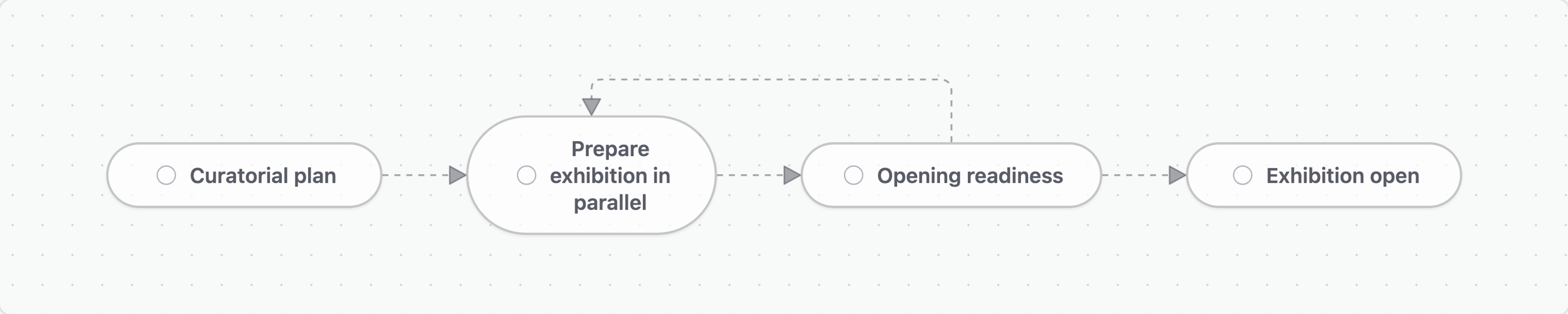
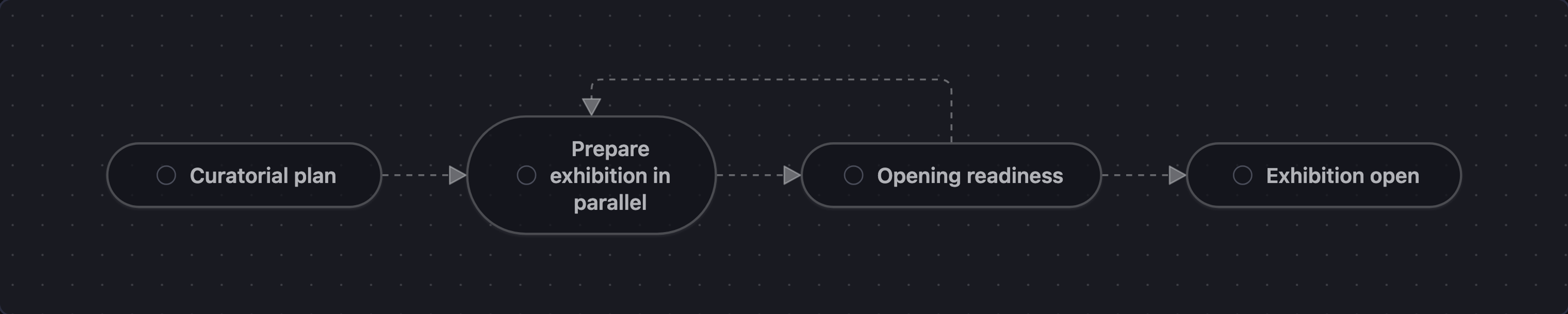
Bring an exhibition from curatorial plan to opening day
An exhibition brings together object records, lender conditions, image rights, interpretation, accessibility, translation, digital experiences, and opening-day communications. A late loan decision can change the gallery story and every channel that presents it.
Editorial Workflows can connect those dependencies without forcing every team into the same tool. Curators, registrars, rights teams, designers, and digital producers each own their decisions, while Sanity holds the content and the shared state needed to understand whether the exhibition is ready.
Enrich a product catalog with automation and human judgment
A commerce team needs descriptions, attributes, crops, translations, and accessibility text for thousands of products. Automation can handle routine work, but confidence varies and high-value products, regulated claims, or unusual results need a person to decide.
Editorial Workflows can move expected results forward automatically and route uncertain or consequential results to the right reviewer. The workflow records what automation produced, what a person changed or approved, and what should happen next, all powered by product content in Sanity.
What these operations have in common
The subject matter changes, but the coordination problem is consistent. Work progresses at different speeds. Decisions change direction. Automation should do repeatable work without becoming the authority. People need to know what is ready, what is blocked, and why. Editorial Workflows makes that operating state part of the product in Sanity.
Choose one operation worth improving
Start with a recurring process where teams already chase status or reconstruct decisions across tools. Identify the content involved, the people and systems that move it forward, and the conditions that make it ready. Build the smallest useful workflow, learn from real use, then extend it.
Understand the operating model
See how definitions, stages, activities, effects, and content fit together.
Build your first workflow
Define, deploy, and run a focused workflow against Sanity content.
Explore implementation examples
Use runnable definitions and integrations when you are ready to implement.