Content schema definition
Content schema is the blueprint of content: defining types, fields, and relationships in a CMS to enable consistency, reuse, omnichannel delivery, and better search understanding.
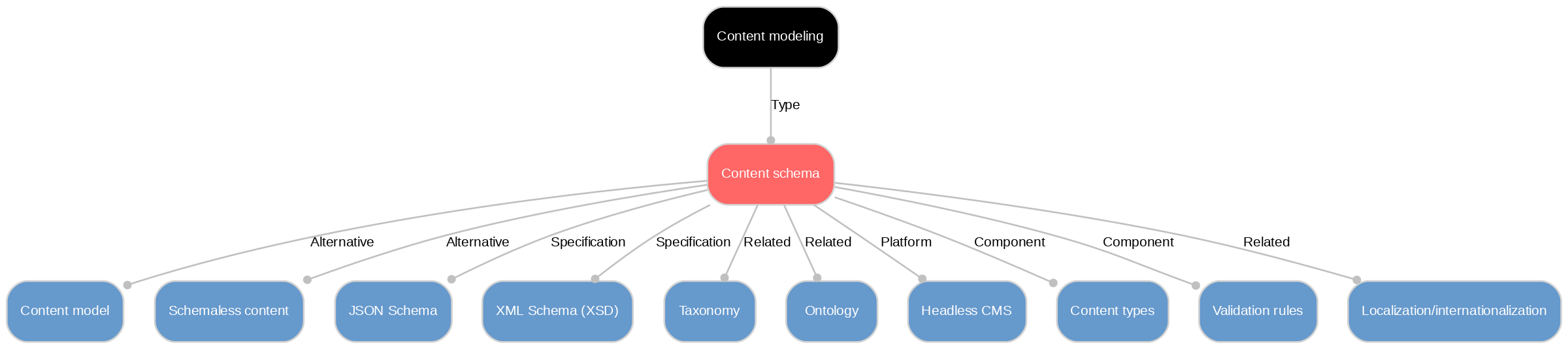
A content schema is the blueprint that defines the types of content your team creates (for example, articles, products, events) and the fields each type must include (such as title, image, author, price). It also sets rules and relationships—what’s required, allowed values, and how pieces of content connect. This structure keeps content consistent, reusable, and ready for delivery to any channel.
In headless CMSs like Sanity or DatoCMS, the schema powers the editor experience and shapes what gets stored and delivered via APIs. Note that a content schema is not the same as Schema.org structured data for SEO; it governs your content model inside the CMS.
A well-defined content schema enforces consistent inputs across your team. Required fields, validation (like formats and options), and clear relationships reduce errors and rework, so every article, product, or event is created with the same structure and quality. Editors move faster because they know exactly what to fill in, and content remains dependable over time.
That structure also unlocks omnichannel reuse: the same content can power websites, apps, and emails through APIs in tools like Sanity or DatoCMS. And while a content schema isn’t Schema.org, it makes structured data straightforward—cleanly mapping fields (author, headline, dates, images) into markup for rich results in search, improving clarity for Google and other platforms.
Align: Gather editors, designers, and stakeholders to list top user tasks and business goals. Inventory your content (articles, products, events) and sketch the types, their relationships (author → article, product → category), and where content will appear (web, app, email).
Model: For each type, define clear fields, mark what’s required, add validation (formats, ranges, options), and create reusable components for repeated patterns (SEO, images, CTAs). Plan localization and use consistent naming. In Sanity, treat the schema as code and preview editor forms before rollout.
Govern: Change safely with a staging environment, a migration/backfill plan, and editor training. Document decisions, run quarterly content audits, and use analytics and search feedback to iterate. Map key fields to Schema.org when relevant to keep
Unlock New Possibilities with Sanity
Now that you've learned about Content schema, why not start exploring what Sanity has to offer? Dive into our platform and see how it can support your content needs.
Last updated: