Document chunking strategies definition
Document chunking strategies split large content into pieces so AI retrieves relevant information efficiently, improving search accuracy, context, and performance in embeddings and RAG workflows.
Document chunking strategies are methods for splitting long content into smaller, meaningful pieces so AI tools, search, and chatbots can find and use the right information quickly. Instead of sending an entire report to an AI model, chunking delivers only the relevant sections, improving accuracy and reducing cost.
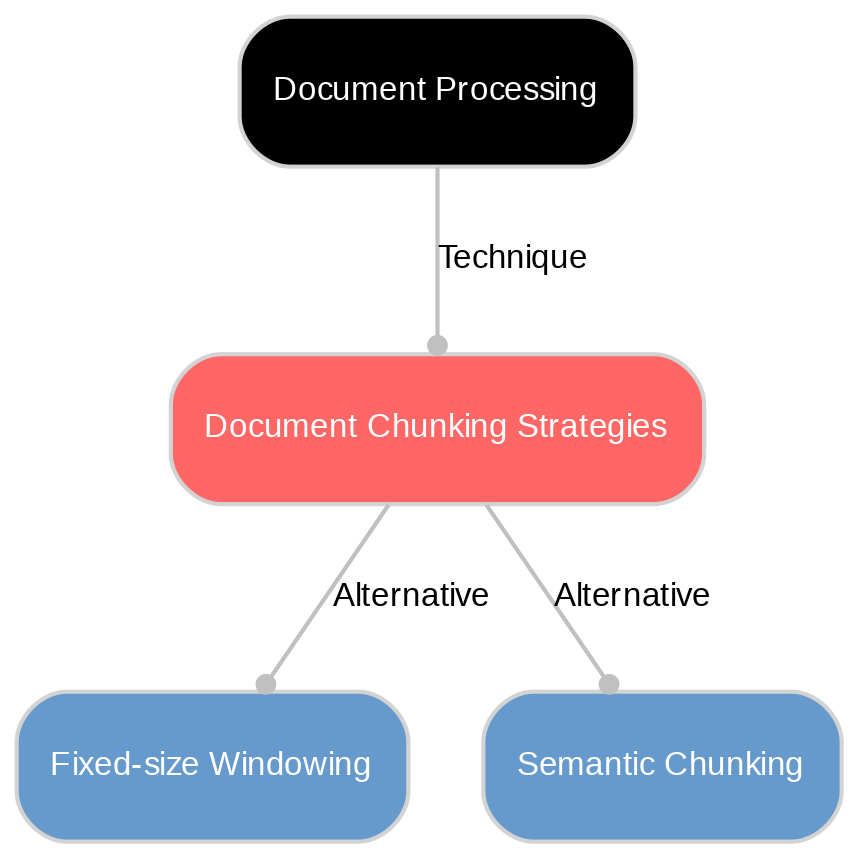
Common approaches include fixed-size chunks (simple, consistent), sentence or paragraph-aware chunks (respect natural structure), semantic or topic-based chunks (group by meaning), and sliding-window chunks with overlap (preserve context across boundaries). Many platforms also apply quality boosts—like removing HTML noise, adding topic headers, or brief summaries—during import or indexing. The goal is the same: keep chunks coherent and searchable so users get precise, fast answers.
For AI assistants, the right chunk size and boundaries directly affect answer quality. Well-formed chunks raise the hit rate of retrieval, keep context inside the model’s token limits, and reduce off-topic content that leads to hallucinations. Techniques like semantic or FAQ-aware chunking help the system pull the exact passage a user needs, while overlap prevents cutting important sentences in half.
Chunking also improves speed and cost: the system embeds and ranks fewer, tighter passages, so it processes only the relevant tokens. In practical tools and CMS imports, options such as noise removal, topic headers, and brief summaries make chunks cleaner and easier to retrieve, which leads to crisper, better-grounded responses.
Start with moderate chunk sizes—about 150–400 words (≈200–500 tokens)—and adjust based on results. Use a small overlap to carry context across boundaries: 10–20% or 1–3 sentences is often enough. If answers feel “clipped,” increase overlap; if results look repetitive, reduce it. Simple, well-tuned rules often perform strongly in tests.
Preserve natural structure: keep headings, paragraphs, lists, and Q&A pairs intact; avoid splitting tables, code blocks, or steps. Attach rich metadata (title, section, URL/anchor, source) and consider a short section summary to aid retrieval. Tools like Voiceflow can remove HTML noise, add topic headers, and summarize on import; CMSs like Sanity help retain clean document structure for chunking. Test with real queries and tune size/overlap accordingly.
Discover More with Sanity
With Document chunking strategies under your belt, it's time to see what Sanity can do for you. Explore our features and tools to take your content to the next level.
Last updated: