Localization (l10n) definition
Localization (l10n) adapts products and content for specific markets, beyond translation—covering language, culture, legal requirements, UX—to boost engagement, SEO, revenue across websites, software, and CMS.
Localization (l10n) is the process of adapting a product, service, or content to a specific country or region so it feels native to local users. Built on internationalization (i18n), it tailors the entire experience—not just words—to local language, culture, and rules, ensuring your product fits how people actually live, work, and buy.
Typical tasks include translation and cultural adaptation, formatting dates, currencies, and units, updating images and tone, supporting right‑to‑left scripts, local SEO, and region‑specific payments and legal notices across websites, apps, games, and support content. The goal is to make each release feel locally made, boosting clarity, trust, and conversion.
Localization directly impacts reach, trust, and revenue. Most people don’t buy in a second language—only about 20% of the world is fluent in English, and 76% of consumers prefer products in their language. When your app, site, or help content feels native, customers understand it faster, feel confident, and are more likely to convert and stay. It also strengthens SEO visibility in each market and reduces costly cultural or legal missteps.
For digital teams, smart localization boosts signups, retention, and support deflection. Modern workflows—using a CMS plus a translation platform (e.g., Transifex, Crowdin, Smartling) and continuous localization—let you ship updates quickly. Tools like Sanity help structure multilingual content, so you can maintain brand consistency at scale without slowing releases.
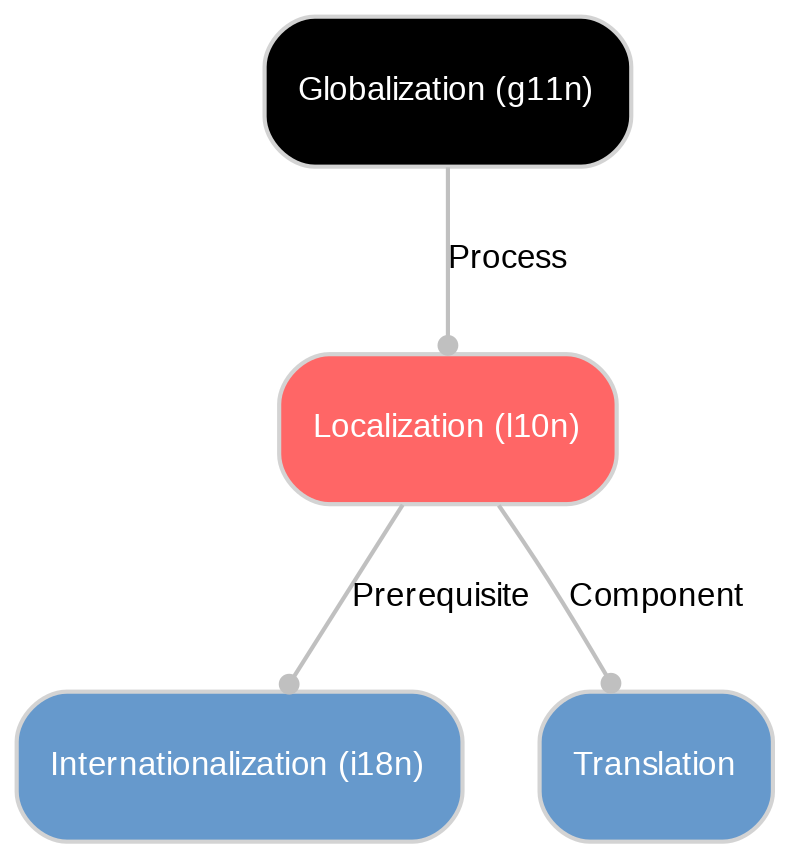
Start with a clear plan: choose priority markets, audit content, and create locale‑specific glossaries and a style guide. Prepare your product for l10n (i18n): externalize text, support Unicode, handle dates, numbers, currencies, and pluralization, design for text expansion and right‑to‑left layouts, and localize SEO keywords, images, payments, and legal notices. Pseudolocalize early to spot truncation and hard‑coded strings.
Build a reliable workflow: connect your CMS (e.g., a headless CMS like Sanity) to a translation platform, use translation memory and termbases, and give translators context (screenshots, character limits). Automate handoffs and language fallbacks, combine AI + human review, and run native, in‑market linguistic and functional QA. Measure with KPIs (quality, time‑to‑publish, conversion) and iterate continuously.
Unlock New Possibilities with Sanity
Understanding Localization (l10n) is just the beginning. Take the next step and discover how Sanity can enhance your content management and delivery.
Last updated: