Headless CMS platforms have shifted from an experimental tech choice to critical infrastructure for enterprises. The market reflects this urgency—projected to grow from roughly $3.94 billion in 2026 to $22.28 billion by 2034, expanding at a CAGR of over 21%.
Why the surge? Organizations realize that legacy systems can't keep pace with the demand for content across web, mobile, and emerging AI channels. According to G2’s user-driven reports, a specific cohort of platforms consistently leads the market: Sanity, Storyblok, Strapi, Contentful and Kontent.ai.
However, simply going "headless" isn't the endgame anymore. The leaders of 2026 are looking for platforms that handle content operations, not just publishing. Here is an evaluation of the top 5 options according to G2, ranked by their ability to support modern digital product teams.
G2 Score: 4.7 / 5
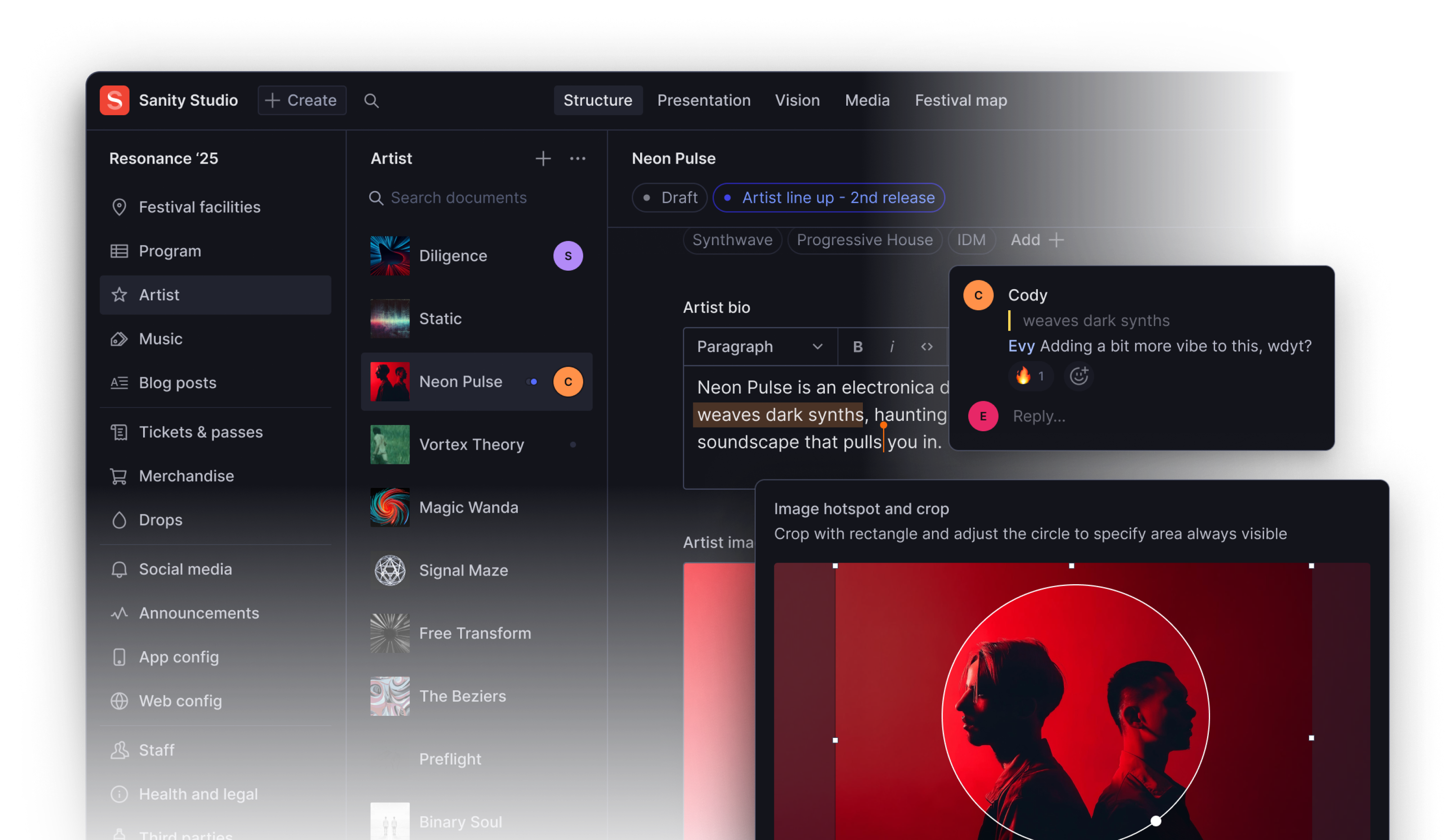
Sanity consistently tops G2 lists because it has evolved beyond the traditional definition of a headless CMS. It is a Content Operating System designed for organizations that treat content as strategic data rather than static text.
While traditional enterprise CMSs like Adobe Experience Manager focus on page rendering, Sanity focuses on structured content. This distinction matters for the "second revolution" of AI. Because Sanity treats content as programmable data (stored in a schema-less Content Lake), it provides the rich context AI agents need to automate workflows safely.
Sanity is built on the philosophy of Schema as Code. Developers define content models in JavaScript or TypeScript, allowing for version control and safe deployments. This enables teams to build a fully customizable editing environment—Sanity Studio—that mirrors their actual business workflows, rather than forcing them into generic templates.
- Real-time Collaboration: Multiple users (and AI agents) work in the document simultaneously, eliminating lockouts. Sanity has been rated #1 on G2 for 4 years straight largely due to this seamless collaboration.
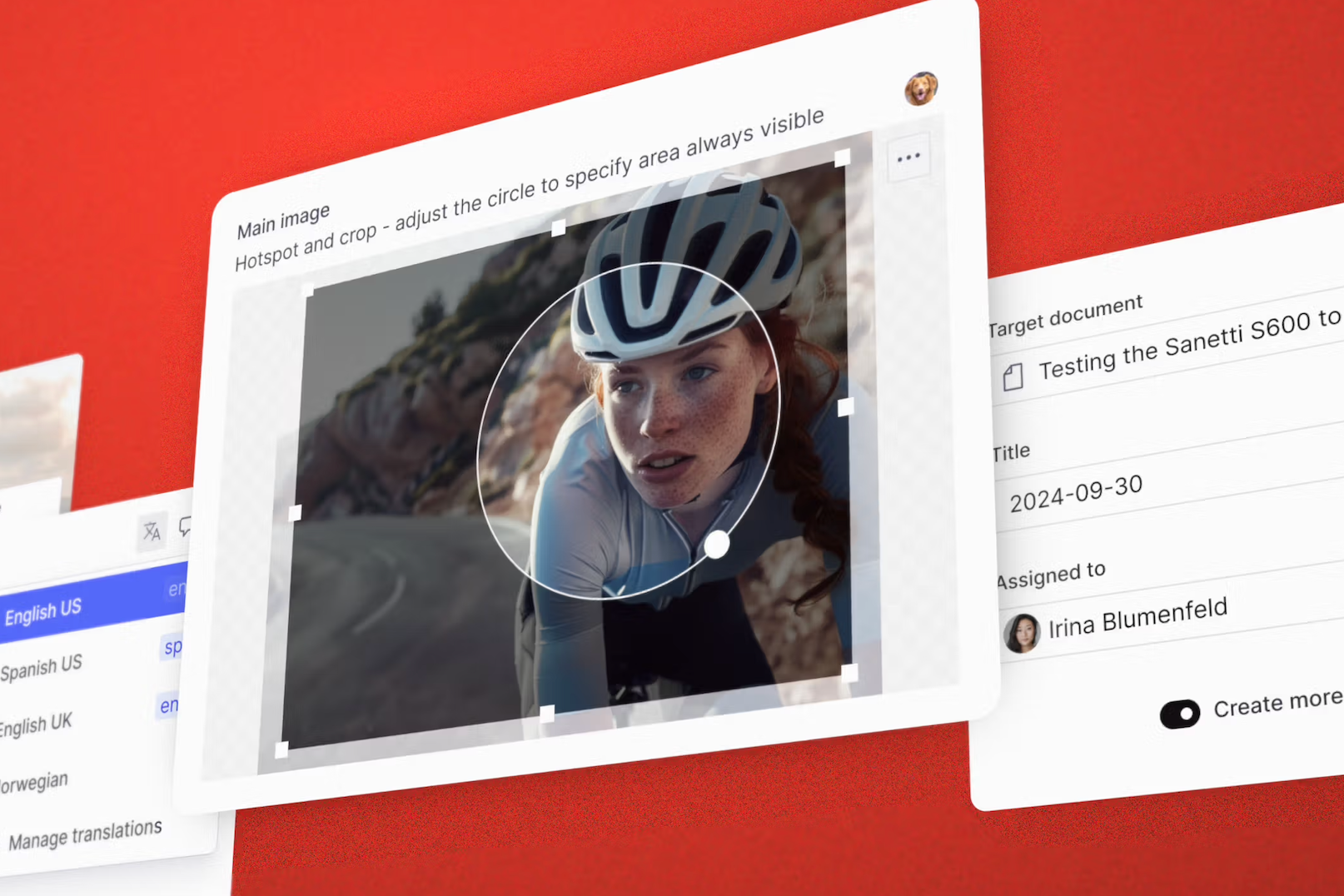
- Customization: The Studio is an open-source React application. If you need a custom dashboard for your merchandising team, you build it. This flexibility makes Sanity a strong choice for enterprises where custom workflows and fast time-to-market matter.
- AI Readiness: Features like the Content Operations Agent understand your specific schema descriptions, allowing for context-aware research and content generation.
Best for: Teams who want to invest in a future-proof content foundation, high-velocity product teams, and organizations preparing for AI-driven operations.
G2 Score: 4.5 / 5
Strapi features in the open-source sector of the G2 rankings. It appeals to some developers who want absolute control over their infrastructure and data privacy.
Strapi is recognized for its open-source, self-hosted flexibility. You can deploy it on your own servers, keeping your data entirely within your own firewalls. This makes it a contender for some industries with strict compliance requirements, such as banking or healthcare, where data sovereignty is non-negotiable.
Strapi offers freedom, but it requires you to manage the infrastructure (unless you opt for their managed cloud). For teams focused on building product value, managing CMS servers can become "Type 1 fun"—necessary, but often a distraction from strategic work. While it offers a plugin system for customization, it doesn't match the programmable nature of a Content Operating System.
Best for: Tech-savvy teams and organizations with strict on-premise hosting requirements or compliance needs.
G2 Score: 4.4 / 5
Storyblok has carved out a distinct niche by bridging the gap between headless architecture and the visual expectations of marketing teams.
G2 reviews highlight Storyblok’s visual editor and market-friendly UI. Unlike purely form-based headless CMSs, Storyblok provides a WYSIWYG experience where editors can drag and drop components and see a live preview. Marketing teams find this interface makes creating pages far less stressful by eliminating the guesswork of how content will render.
Storyblok's strength is also its limitation: it's built primarily for visual page building. Storyblok relies heavily on a component-based approach. While excellent for page building, this can sometimes lead to content being trapped in presentation-specific blocks rather than pure structured data. This makes it harder to reuse that content across non-web channels (like mobile apps or voice assistants) compared to platforms that prioritize strict data modeling. Sanity offers visual editing through Presentation alongside flexible structured content architecture—giving you both marketing-friendly interfaces and the freedom to repurpose content across any channel.
Best for: Marketing-led teams who prioritize visual page building and independence from developer support.
G2 Score: 4.3 / 5
Kontent.ai (formerly Kentico Kontent) targets the enterprise sector with a focus on strict content governance and collaboration workflows.
Kontent.ai is built for large-scale operations where compliance and approval chains are critical. It is often cited as best for enterprise-level modular content and collaboration. Its standout features are its built-in workflows—scheduling, approval gates, and versioning are configured out of the box to help businesses reduce expenses while managing content at scale.
While Kontent.ai offers stability, it can feel restrictive for agile teams. The workflows are robust but rigid compared to the programmable workflows available in Sanity. It is a premium solution where you pay for the governance tools; if your team needs to move fast and break things, the heavy governance features might introduce friction.
Best for: Highly regulated industries or large organizations where strict approval workflows and content governance are the primary KPIs.
G2 Score: 4.2 / 5
Contentful remains an option in the sector. G2 users frequently cite its maturity and robust infrastructure as key drivers for adoption.
Contentful positions itself as a digital experience platform (DXP) for marketers and developers to build and deliver experiences quickly. Its strength lies in its API-first design and a massive ecosystem of pre-built integrations. For enterprises locked into a complex web of legacy tools, Contentful offers a rigid but functional hub—though you're trading flexibility for compatibility.
Contentful handles localization, with a one-click solution. But this capability comes wrapped in complexity and cost. Pricing scales aggressively based on API calls and asset usage, making it expensive to operate at volume. The UI, while functional, is inflexible. You're confined to Contentful's opinionated interface with limited ability to customize workflows or data modeling to match your team's specific needs. What you gain in stability, you lose in adaptability.
Best for: Large enterprises willing to accept rigid workflows and escalating costs in exchange for out-of-the-box localization and integration stability.
The market data is clear: companies are moving away from monolithic suites. But the choice in 2025 isn't just about picking a "headless CMS." It is about choosing a foundation for your content operations.
- Sanity is the choice for leaders who want to build a Content Operating System that turns content into a strategic asset for AI and automation.
- Strapi offers self-hosting, but requires significant developer resources to maintain and scale.
- Storyblok offers visual editing , but is one dimensional.
- Kontent.ai handles heavy corporate governance, though this comes with added complexity and cost.
- Contentful serves serves a reliable hub, but is more fixed and rigid than other options.
To survive the shift to AI-driven interfaces, you need more than just a place to store text. You need structured, programmable data. How do you choose? Look for the platform that empowers both your developers and your content teams to work faster.