
WinnerPath two
Pothole Adoption Agency
by FarisCommunity & civic
A shelter where the animals are New York City potholes. Find one that needs care, adopt it, and follow the city's progress on fixing it.
WinnerPath twoConsumer & lifestyle
A wine collection that learns your taste and helps you drink your best bottles before they're past their prime.
by Ken W Alger
What it does
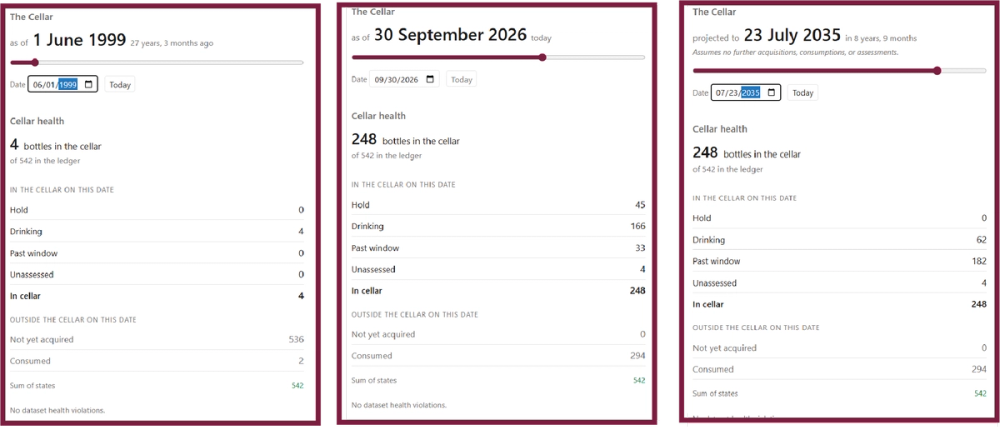
A collector moves a date control and sees bottle counts by state at that moment: in the cellar, drinking, past window or not yet bought. Drink Soon lists windows closing within a year and names the claim behind each one.
Missed Opportunities shows bottles that peaked in a period, went unopened and are now past window. Bottles and tastings are added in Studio, and a public read-only page shows the same views without an account.
The problem
Typical cellar apps keep a current status per bottle and a single drinking window per wine. That answers what is true today, but nothing about last year, and every new opinion replaces the old one. Collectors cannot see what they missed, or why a window changed, because the history is gone.
What they built
6 document types and 1,645 documents describing a 542-bottle cellar in a public dataset.
producer
A wine producer.
wine
One wine from a producer, which bottles and assessments refer to.
bottle
A single physical bottle of a wine.
acquisition
A dated event recording when bottles entered the cellar.
consumption
A dated event recording a bottle being opened, with a tasting note.
assessment
A dated, attributed drinking-window claim with source tier, source method and review state.
The stack
The hard part
No window is stored as a fact. A pure TypeScript module picks the controlling claim at any date: the owner's tasting outranks the producer, which outranks a critic, and the newest claim wins within a tier.
An agent reads tasting notes and proposes claims, quoting the phrase it used or abstaining. Proposals sit in a review queue with a read-only state field, so only two Studio actions can accept or reject them. Rejected claims stay in the dataset as part of the record.
WinnerPath two
by FarisCommunity & civic
A shelter where the animals are New York City potholes. Find one that needs care, adopt it, and follow the city's progress on fixing it.
Team favoritePath two
by Andrei AlbaConsumer & lifestyle
Is it rude here? An etiquette guide with no verdict field: locals vote on each custom, and when they disagree the site shows the split instead of picking a side.
ShowcasedPath two
by neromtoobadResearch, science & evidence
Lets a lab member rule on conflicting protocol values, turning each ruling into a lab rule its agent follows.

