
WinnerPath two
A wine cellar that remembers what you used to believe
by Ken W AlgerConsumer & lifestyle
A wine collection that learns your taste and helps you drink your best bottles before they're past their prime.
ShowcasedPath twoConsumer & lifestyle
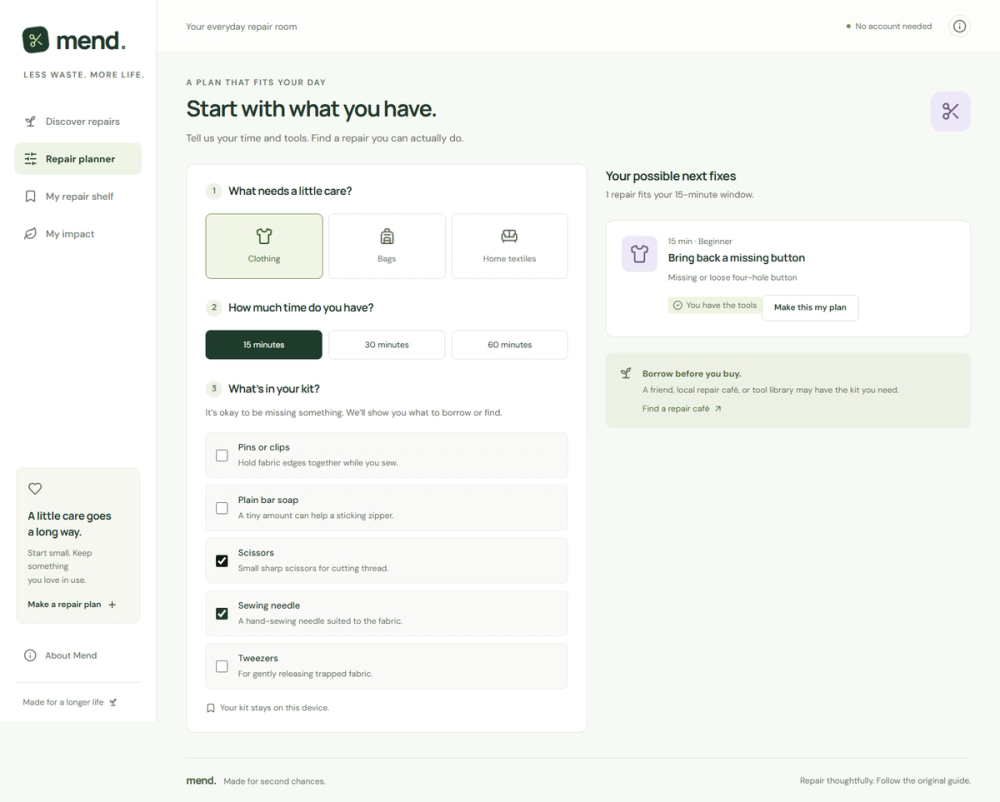
Matches small clothing and textile repairs to the time and tools a person already has at home.
by Arya Koste
What it does
A person sets a category, how many minutes they have and which tools they own. Mend filters the repair library, ranks matches by missing tools and lists the materials still needed.
The chosen plan becomes a checklist that survives a reload. Finished repairs move into a journal that counts jobs and optional item weights, and can be printed or exported as JSON. No account is needed.
The problem
A loose button or open seam is easy to ignore. Before starting, someone has to diagnose the damage, check their tools and guess how long it will take. Generic guides also blur similar problems, such as a sticking zipper versus one with broken teeth, so advice for one case can end up applied to another.
What they built
6 repair guides and 5 tools in Content Lake, each guide credited to an iFixit source.
repairGuide
One repair: symptom, duration, difficulty, materials, tool references, steps, cautions, credited source and review status.
tool
One tool, such as a sewing needle, with a description reused by every repair that needs it.
The stack
The hard part
Editors move a guide through send for review, approve and publish using custom Studio actions. Approval saves an exact copy of the reviewed fields, and the publish action stays disabled if the content changes afterward. A revision check catches edits made during approval.
The public app only queries approved, published guides, so drafts never leak into the library. The builder notes this coordinates editors but is not an API-level permission control.
WinnerPath two
by Ken W AlgerConsumer & lifestyle
A wine collection that learns your taste and helps you drink your best bottles before they're past their prime.
WinnerPath two
by FarisCommunity & civic
A shelter where the animals are New York City potholes. Find one that needs care, adopt it, and follow the city's progress on fixing it.
Team favoritePath two
by Andrei AlbaConsumer & lifestyle
Is it rude here? An etiquette guide with no verdict field: locals vote on each custom, and when they disagree the site shows the split instead of picking a side.

