
WinnerPath two
A wine cellar that remembers what you used to believe
by Ken W AlgerConsumer & lifestyle
A wine collection that learns your taste and helps you drink your best bottles before they're past their prime.
ShowcasedPath twoBusiness ops & commerce
Lets small upholstery workshops sell products cut from leftover fabric, with owner consent and no double-selling.
by Mide
What it does
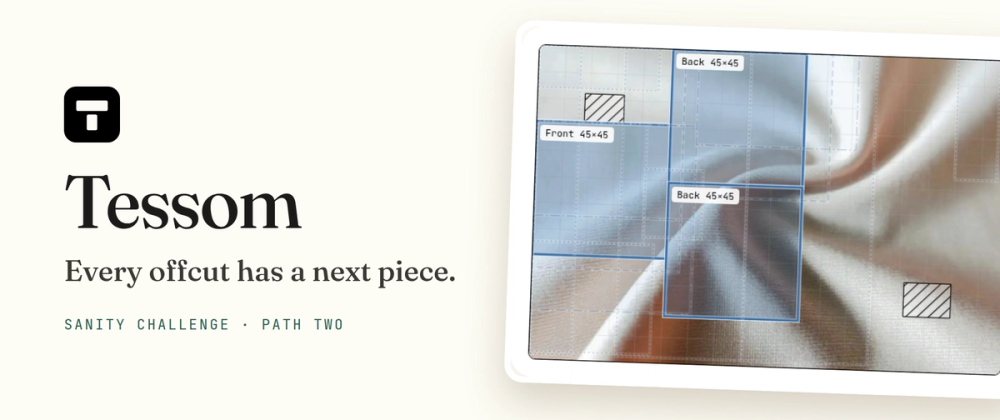
The shop lists only products that fit the usable area of each remnant, with the cut placement and price drawn on the fabric. An order locks that exact area, and the workshop moves it from consent through cut, sewn and shipped.
Anyone can offer leftover fabric with a photo. A vision model in Studio suggests the fabric name, maker, repeat and direction from the selvage for the workshop to accept.
The problem
A remnant has an odd shape, flaws, a pattern repeat and a fixed direction, so working out what it can make takes effort. Large pieces often still belong to the client whose furniture was upholstered, so the workshop cannot sell them without permission. Once a piece is partly sold, any listing based on the old area is wrong.
What they built
remnant
One offcut: dimensions, repeat, direction, flaws, ownership, photo, existing allocations and workflow state.
sanity.workflow.instance
One order's live workflow stage, from awaiting consent through shipped.
The stack
The hard part
Offers are never stored. They are fitted from the current remnant each time, so a cut cannot stay listed after its area is sold. Fitting is deterministic, with no model involved.
An order writes its allocation using the remnant's Sanity revision, so only one of two simultaneous buyers can win. In testing, one got HTTP 200 and the other HTTP 409, and the other browser updated through a Sanity listener.
WinnerPath two
by Ken W AlgerConsumer & lifestyle
A wine collection that learns your taste and helps you drink your best bottles before they're past their prime.
WinnerPath two
by FarisCommunity & civic
A shelter where the animals are New York City potholes. Find one that needs care, adopt it, and follow the city's progress on fixing it.
Team favoritePath two
by Andrei AlbaConsumer & lifestyle
Is it rude here? An etiquette guide with no verdict field: locals vote on each custom, and when they disagree the site shows the split instead of picking a side.

