
WinnerPath two
A wine cellar that remembers what you used to believe
by Ken W AlgerConsumer & lifestyle
A wine collection that learns your taste and helps you drink your best bottles before they're past their prime.
ShowcasedPath twoCommunity & civic
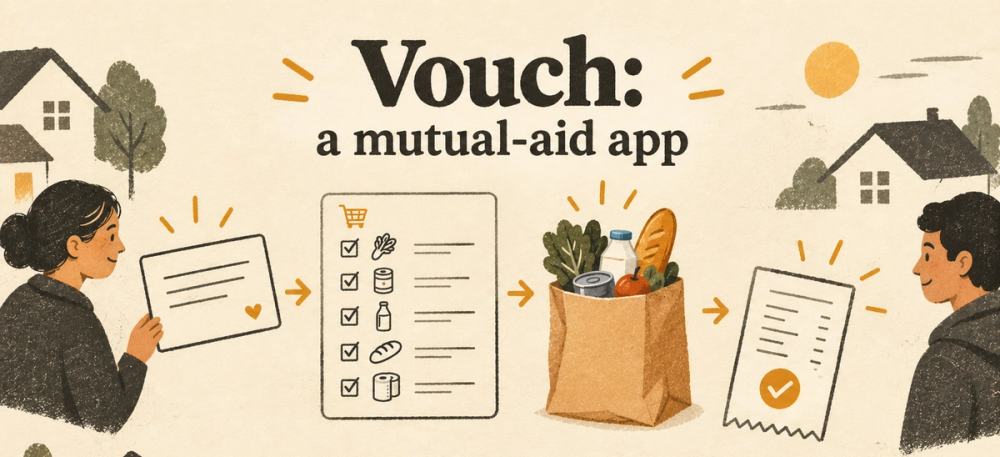
A mutual-aid app where neighbors pledge items against checked requests and receipts close each one with a verifiable certificate.
by Gilang Adam
What it does
A requester types or dictates what they need. The app proposes a checklist from a catalog, and once the request is approved it appears in a public feed where neighbors pledge items.
The buyer uploads a receipt, which is read in the browser and matched to the checklist. When every unit is covered, the request closes with a certificate whose hash anyone can recompute.
The problem
Strangers asking for help need their own words kept intact, and donors need to know a request and its fulfillment are real. An earlier attempt by the builder faked this layer: proof checks always passed. Letting a model rewrite pleas or declare success hides failures, so the hard part is making every trust claim traceable and sending anything uncertain to a person.
What they built
5 public document types; receipts, reviews, rate-limit counters and workflow instances kept private with dotted ids.
need
One help request with the requester's read-only words and checklist; created as a draft until verified.
policy
Thresholds and the exact yes/no questions put to the model, editable without a redeploy.
decision
One model call: questions, answers, model, timing, and a SHA-256 digest of the plea.
pledge
A neighbor's pledge, written in the same transaction as the checklist counter.
certificate
Canonical JSON for a fulfilled request plus its SHA-256 hash.
The stack
The hard part
Jev is limited to yes/no with a probability, picking an option, or scoring on a scale. Thresholds, explanations, and unit counts come from code and policy content, and anything uncertain goes to a volunteer. Publishing in the public dataset is the verification step, so drafts never leak.
Because the questions live in Sanity, a missed money request was fixed by rewording the policy in Studio with no redeploy. Every call is logged as a decision document, so each outcome can be audited.
WinnerPath two
by Ken W AlgerConsumer & lifestyle
A wine collection that learns your taste and helps you drink your best bottles before they're past their prime.
WinnerPath two
by FarisCommunity & civic
A shelter where the animals are New York City potholes. Find one that needs care, adopt it, and follow the city's progress on fixing it.
Team favoritePath two
by Andrei AlbaConsumer & lifestyle
Is it rude here? An etiquette guide with no verdict field: locals vote on each custom, and when they disagree the site shows the split instead of picking a side.

