Metadata enrichment definition
Metadata enrichment is the process of adding meaningful context to content and data, improving searchability, personalization, analytics, compliance, and automation across websites, apps, media libraries.
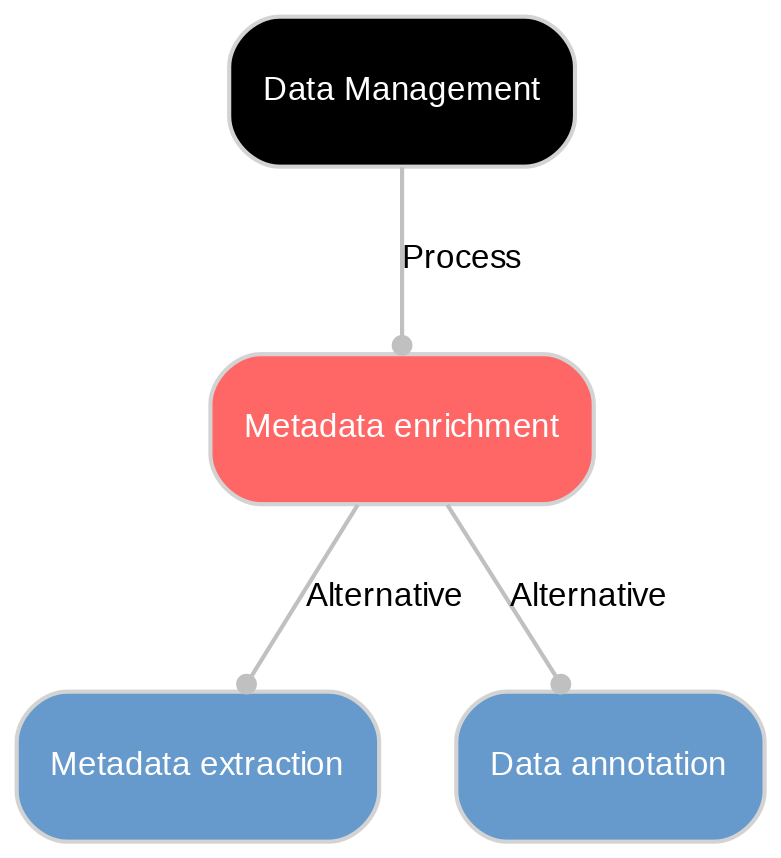
Metadata enrichment is the process of adding helpful, structured details to content and data so they’re easier to find, understand, and use. It goes beyond basic titles and dates by including keywords, tags, categories, relationships, audience info, rights, and other domain-specific fields (for example, a book’s reading age, a product’s material, or an image’s alt text). Enrichment can be applied by people, by automated rules, or with AI-assisted tagging.
Done well, it boosts discoverability and SEO, improves search and recommendations, strengthens governance and compliance, and raises overall data quality. Modern CMS and DAM tools, such as Sanity, support inline annotation and semantic metadata on text and images, making enrichment part of everyday editorial workflows.
Metadata enrichment matters because it turns raw content into structured, searchable assets that drive results. Rich tags, categories, and relationships align pages with user intent, yielding higher click‑throughs from search and better on‑site findability. It enables personalization, supports
For teams, enrichment boosts operational efficiency: consistent vocabularies, reusable fields, and AI‑assisted tagging cut manual work and errors. It also ensures omnichannel consistency, so one enriched record powers web, apps, social cards, and voice. In Sanity, rules, validation, and references keep metadata accurate at scale and connect content to products, people, and places.
Enriched metadata is also what retrieval systems and AI agents read. Research on retrieval-augmented generation now treats metadata enrichment as a distinct, measurable lever, separate from how documents are chunked or how a query is planned. The mechanical reason is visible in Sanity, where dataset embeddings in GROQ mode expose semantic similarity only as a scoring function: it ranks candidates, it does not filter them. You narrow the set with a structured filter on fields like audience, product line, locale, or rights, then let semantic scoring order what survives. Thin metadata leaves nothing to filter on, so the agent ranks the whole dataset and retrieves confidently from the wrong half of it.
Start with clear goals (findability, compliance, personalization). Define a lean metadata schema with required fields and a
Measure impact via SEO impressions and CTR, on‑site search success and zero‑result rate, retrieval precision on the filters your agents and search features actually use, and operations metrics like field completion, time‑to‑publish, and asset reuse. Run A/B tests comparing enriched vs. basic pages. In Sanity, use validations and APIs to monitor fill‑rates and iterate on the schema and vocabulary.
Explore Sanity Today
With Metadata enrichment under your belt, it's time to see what Sanity can do for you. Explore our features and tools to take your content to the next level.
Last updated: