Schema-driven content definition
Schema-driven content uses explicit, machine-readable models to structure, validate, and reuse information, enabling automation, consistency, and omnichannel delivery across channels with flexible platforms like Sanity.
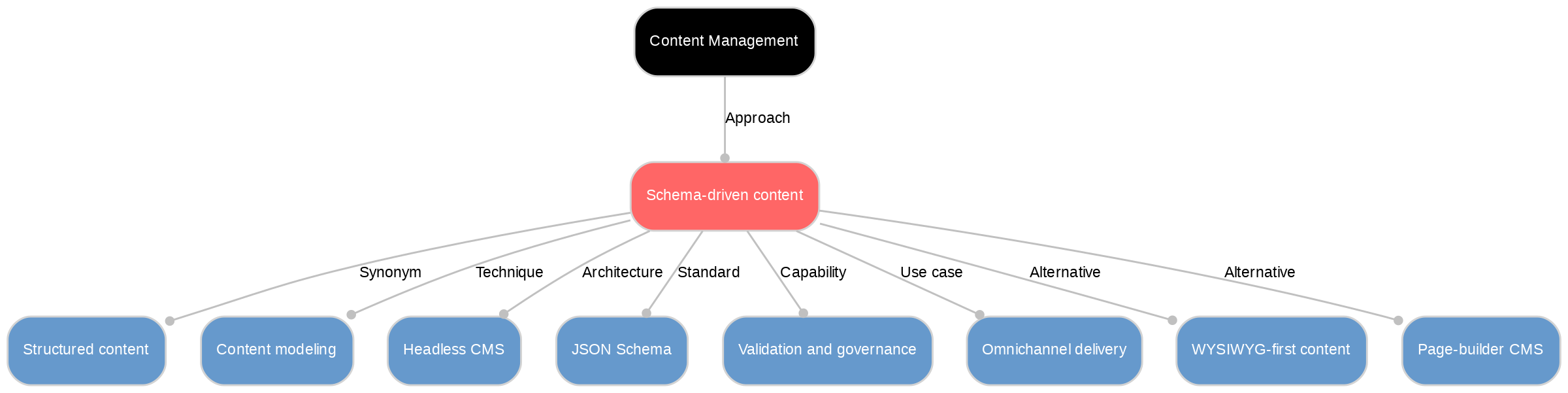
Schema‑driven content is an approach where you begin with a schema—a machine‑readable blueprint that defines each piece of content (fields like title, summary, author), the relationships between them, and the rules they must follow. That model becomes a single source of truth for editors and software, guiding content entry, enforcing validation and governance, and powering automation across websites, apps, and feeds. Instead of free‑form pages, content is structured, predictable, and reusable, so teams can generate forms, APIs, and documentation from the same model. Platforms such as Sanity express schemas as code, enabling real‑time APIs and consistent omnichannel delivery while keeping authors focused on clean, accurate content.
A clear schema removes guesswork. Editors get purpose‑built fields and help text instead of blank pages, so copy is consistent and complete the first time. Because every entry follows the same model, teams can reuse approved components (like disclaimers or product specs) and update them once across all touchpoints—cutting copy‑paste and errors. Schemas also carry governance and compliance rules (required fields, formats, ownership), which helps regulated teams stay audit‑ready. With platforms like Sanity, that same model powers real‑time collaboration, inline validation, and channel‑ready outputs for web, apps, and print. Shared definitions act like a contract between content and tech, enabling faster releases, easier localization, and reliable personalization.
Begin with a short workshop to inventory your key content types (e.g., article, product, event). For one priority type, list the fields, relationships, and rules (required title, max summary length, alt text on images, allowed categories). Agree on controlled vocabularies and ownership. Capture this as a simple model—then implement it in a tool like Sanity (schema‑as‑code) so editor forms and validation are generated automatically.
Run a pilot: migrate 5–10 items, gather editor feedback, and refine the schema. Document the rules, set up publishing checks, and version the schema so changes are safe and trackable. Establish reusable components (e.g., disclaimers, specs) as a single source of truth and connect outputs to your channels via APIs.
Unlock New Possibilities with Sanity
With Schema-driven content under your belt, it's time to see what Sanity can do for you. Explore our features and tools to take your content to the next level.
Last updated: