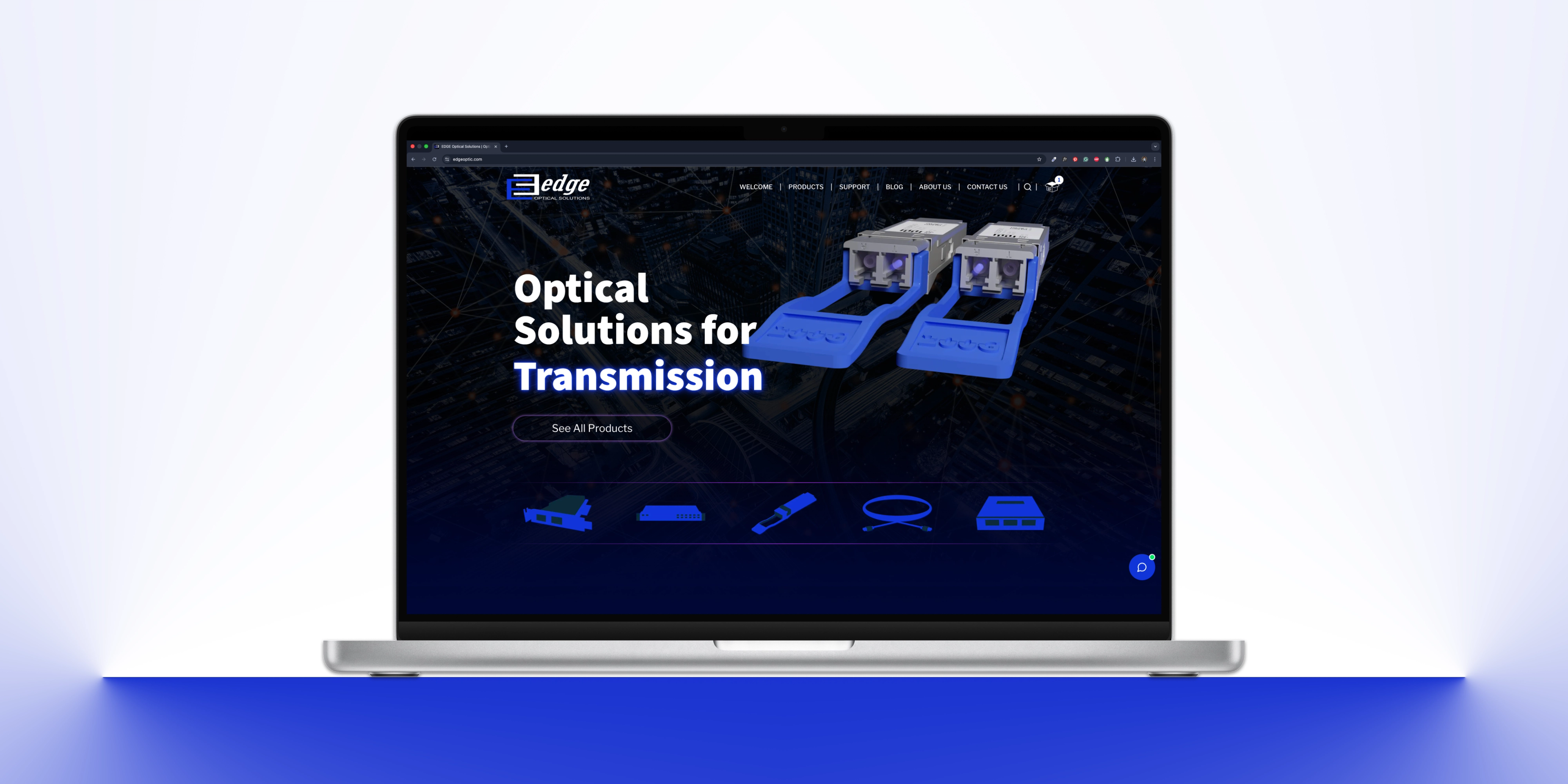
EDGE Optical Solutions a B2B supplier of optical transceivers, DAC/AOC cables, passive xWDM multiplexers, and network interface cards, serving 2,000+ customers across telecom, data center, and mobile network industries worldwide. With over 10 years in the field and compatibility across 100+ networking brands - Cisco, Juniper, Huawei, Nokia, Dell, NVIDIA, and more - the product catalog is both vast and deeply technical.
The old site ran on WordPress and WooCommerce. It worked - until it didn’t. Managing 6,000 SKUs with attributes that span multiple axes turned routine product updates into development tasks. Editors had no reliable way to manage content relationships, enforce SEO consistency across thousands of pages, or generate product datasheet with edited technical parameters at the moment of adjustment. In reality identical products had to be kept as a separate entries with their own prices, description and attributes, editing which, would take up an entire workday. We needed a content backend that could model the actual complexity of our catalog, not just store flat product fields.
We rebuilt the site from scratch with Next.js framework, deployed on Vercel, and Sanity as the content engine. The Studio was bult from ground-up to better suit or requirements and needs. A structured desk organizes content into filtered sections — Products, Blog, Knowledge Base, and FAQs — so editors always know where to go. At the heart of it is the product schema: attribute fields that change type dynamically based on their product’s category, variant selectors that pull options from the parent product document. A dedicated keyword dashboard provides site-wide SEO oversight with real-time conflict detection and CSV export. Cross-document validation catches keyword conflicts at save time, before a product ever goes live.
One of the most impactful additions is the in-Studio datasheet generator. Editors can now produce a ready to-use product datasheet with the most up to date information taken directly from products sanity data fields, giving up-to date data everywhere at once. For a catalog of 6,000 products, that’s a fundamental shift in how the team operates. Custom panes also surface content relationships without leaving the current document, so editors can see at a glance which pages reference a given product.
The main takeaway: in a technically complex B2B niche, the CMS has to model the domain - not the other way around. Sanity’s flexible schema system, combined with the ability to build custom Studio tools, made it possible to give editors the exact interface the content requires. We’re now managing the full site — 6,000+ products, a decade of technical articles, and all support content — from a single, structured source of truth.