Advanced Reference Array
Enhanced reference array component for Sanity Studio with search, sort, and bulk operations
Install command
npm i @liiift-studio/sanity-advanced-reference-arraySanity Advanced Reference Array


🚀 Enhanced reference array component for Sanity Studio with search, sort, and bulk operations
A powerful, TypeScript-ready component that supercharges Sanity's reference arrays with advanced search capabilities, intelligent sorting, and intuitive bulk operations. Built from real-world usage in production Sanity studios.
Drop it onto any array of reference fields as a custom input component. Editors get a live search box that adds documents with a single click (or all at once), a sort mode that reorders the array by any field on the referenced documents, and a guarded "remove all". Everything is written back through normal Sanity patches, so the stored value stays a plain reference array.
🎥 See It In Action
https://github.com/user-attachments/assets/bb53e81b-4475-4510-bd86-452b954e3d2c
Watch the Advanced Reference Array in action - featuring smart search, click-to-add functionality, bulk operations, and dynamic sorting.
✨ Features
🔍 Smart Search
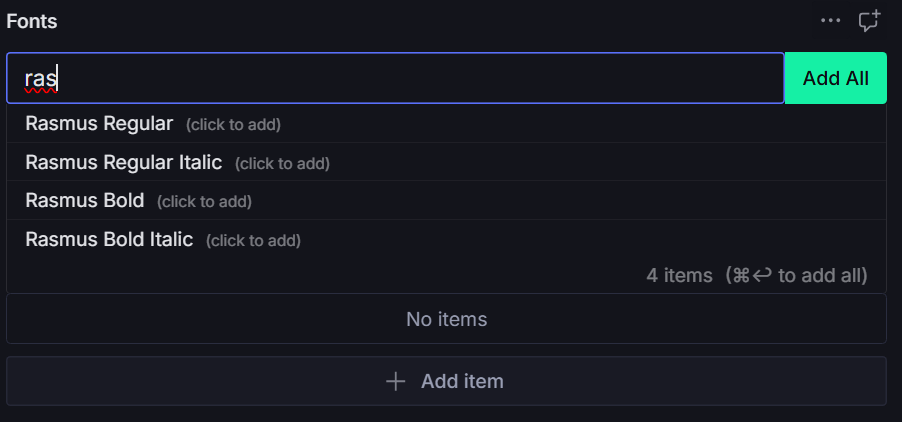
- Live GROQ queries with debounced search
- Smart filtering - automatically hides items already in your array
- Individual click-to-add - click any search result to add it instantly
- Bulk "Add All" - add multiple items at once
- Keyboard shortcuts -
Ctrl+Enterto add all,Escapeto clear search
🎯 Dynamic Sorting
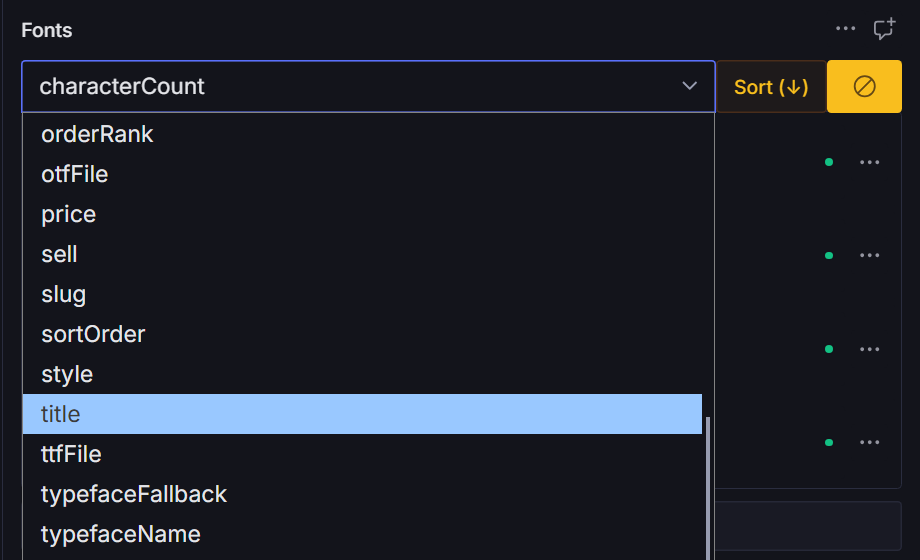
- Sort by any field in your referenced documents
- Visual sort indicators - see if your list is already sorted
- Toggle sort direction - ascending/descending with one click
- Browser compatible - works across all modern browsers
🛡️ Safety & UX
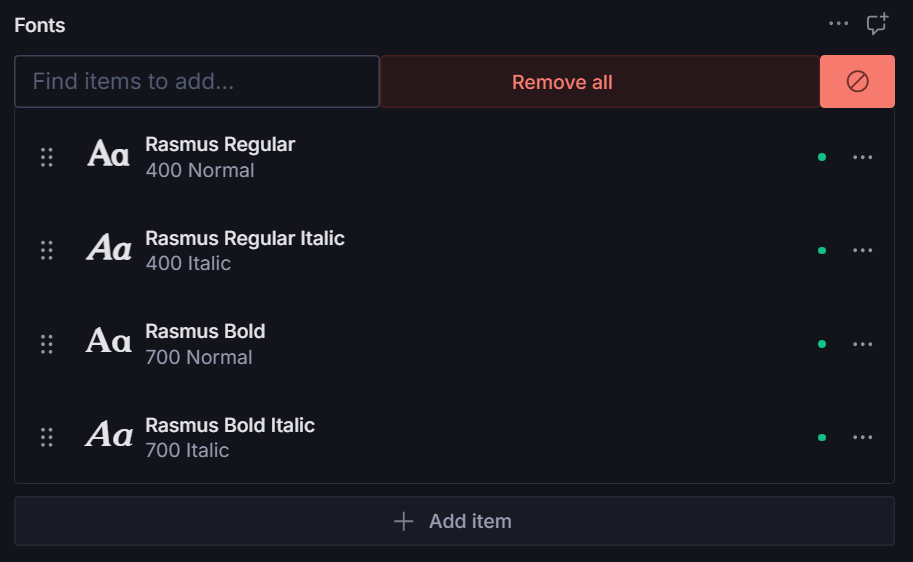
- Danger mode - prevents accidental bulk deletions
- Confirmation dialogs for destructive operations
- Loading states and error handling
- Responsive design - works on mobile and desktop
- Accessibility ready - keyboard navigation support
⚡ Performance
- Debounced search - no unnecessary API calls
- Smart caching - efficient data fetching
- TypeScript support - full type safety
- Collapsible list - long arrays auto-collapse so the form stays navigable
📦 Installation
npm install @overpunch/sanity-advanced-reference-arrayPeer dependencies (sanity, react, @sanity/ui, @sanity/icons) are already present in any Sanity Studio — see Compatibility.
🚀 Quick Start
Attach the component as the input for an array of references. No configuration is required — the defaults are the behaviour shown in the video above.
import { defineType, defineField } from 'sanity'
import { AdvancedRefArray } from '@overpunch/sanity-advanced-reference-array'

export const myDocument = defineType({
  name: 'myDocument',
  type: 'document',
  fields: [
    defineField({
      name: 'relatedItems',
      title: 'Related Items',
      type: 'array',
      of: [
        { type: 'reference', to: [{ type: 'product' }, { type: 'article' }] },
      ],
      components: {
        input: AdvancedRefArray,
      },
    }),
  ],
})
Data shape
The stored value is an ordinary Sanity reference array — this component changes the editing experience, not the data. Sorting rewrites the array order; nothing else about the shape changes.
"relatedItems": [
  { "_type": "reference", "_key": "a1b2c3d4", "_ref": "product-oxford" },
  { "_type": "reference", "_key": "e5f6g7h8", "_ref": "article-on-serifs" }
]
Query it exactly as you would any reference array:
*[_type == "myDocument"]{
  relatedItems[]->{ _id, title }
}
⚙️ Configuration
Read this before copying a config example. There are two different mechanisms, and most options only work through one of them.
Sanity passes a fixed set of props to a custom input component — you cannot pass arbitrary settings through the field's options object and have them arrive as props. So this component reads its configuration from two places:
flowchart TB
    W["Wrapper component<br/>(props you pass)"] -->|"most options"| C["AdvancedRefArray"]
    S["Field schema<br/>options: { … }"] -->|"collapsibleList<br/>collapseThreshold only"| C
    D["Built-in defaults"] --> C
    C --> R["Rendered input"]
Resolution order for the two schema-readable options is explicit prop → schema options → default. Every other option is prop-only.
Configure via a wrapper (the general case)
Wrap the component to bind props, then use the wrapper as your input:
import { defineType, defineField } from 'sanity'
import { AdvancedRefArray } from '@overpunch/sanity-advanced-reference-array'

// Bind options once, reuse across fields
const CuratedRefArray = (props) => (
  <AdvancedRefArray
    {...props}
    maxSearchResults={20}
    searchPlaceholder="Search products..."
    allowBulkAdd={false}
    showItemCount={false}
  />
)

export const collection = defineType({
  name: 'collection',
  type: 'document',
  fields: [
    defineField({
      name: 'featuredItems',
      type: 'array',
      of: [{ type: 'reference', to: [{ type: 'article' }] }],
      components: { input: CuratedRefArray },
    }),
  ],
})
Configure via schema options (collapse only)
defineField({
  name: 'relatedItems',
  type: 'array',
  of: [{ type: 'reference', to: [{ type: 'product' }] }],
  components: { input: AdvancedRefArray },
  options: {
    collapsibleList: true,    // read from schema options
    collapseThreshold: 10,    // read from schema options
  },
})
Option reference
| Option | Type | Default | Settable via | What it does |
|---|---|---|---|---|
searchPlaceholder | string | 'Find items to add...' | prop | Placeholder text for the search input |
allowIndividualAdd | boolean | true | prop | Click a search result to add it |
allowBulkAdd | boolean | true | prop | Show the "Add All" button |
filterExisting | boolean | true | prop | Hide results already in the array |
maxSearchResults | number | 50 | prop | Slice applied to the search query |
showItemCount | boolean | true | prop | Show result counts under the list |
enableKeyboardShortcuts | boolean | true | prop | ⌘/Ctrl+Enter add all, Escape clear |
filterGroq | string | — | prop | Extra GROQ condition appended to the search with && |
filterParams | (document) => object | — | prop | Returns GROQ params derived from the current document |
collapsibleList | boolean | true | prop or schema options | Enable the collapse/expand toggle |
collapseThreshold | number | 20 | prop or schema options | Auto-collapse once the array exceeds this many items |
Document-scoped search with filterGroq / filterParams
The most powerful pairing: narrow the search to documents related to the one being edited. filterParams receives the current document and returns GROQ parameters; filterGroq is appended to the search condition.
// Only offer fonts that belong to the typeface currently being edited
const typefaceParams = (doc) => ({ typefaceName: doc?.title || '' })

const FontsRefArray = (props) => (
  <AdvancedRefArray
    {...props}
    filterGroq="lower(typefaceName) == lower($typefaceName)"
    filterParams={typefaceParams}
  />
)
This is exactly how @overpunch/sanity-font-manager scopes its font pickers.
How search and sort actually resolve fields
Two behaviours worth knowing, because they are automatic rather than configured:
- Search matches the
titlefield only. The generated query is*[_type in $types && title match $search][0...maxSearchResults]. Referenced documents therefore need atitleto be findable. There is nosearchFieldsoption — searching additional fields is not currently implemented. - Sortable fields are auto-discovered. On entering sort mode the component expands the referenced documents and offers every non-underscore-prefixed key of the first result as a sort field. There is no
sortableFieldsoption — the list comes from your data.
Earlier drafts of this README documented
searchFieldsandsortableFieldsoptions. They were never implemented; the behaviour above is what ships. Both remain reasonable feature requests — see Contributing.
🎯 Real-World Examples
E-commerce Product Relations
// Perfect for related products, cross-sells, upsells
const ProductRefArray = (props) => (
  <AdvancedRefArray {...props} maxSearchResults={20} searchPlaceholder="Search products..." />
)

defineField({
  name: 'relatedProducts',
  title: 'Related Products',
  type: 'array',
  of: [{ type: 'reference', to: [{ type: 'product' }] }],
  components: { input: ProductRefArray },
})
Content Collections
// Great for curated article collections, featured content.
// Curated content should be added individually, so bulk add is off.
const CuratedArticles = (props) => (
  <AdvancedRefArray {...props} allowBulkAdd={false} filterExisting />
)

defineField({
  name: 'featuredArticles',
  title: 'Featured Articles',
  type: 'array',
  of: [{ type: 'reference', to: [{ type: 'article' }] }],
  components: { input: CuratedArticles },
})
Team & Author Management
// Perfect for assigning multiple team members, contributors
const PeopleRefArray = (props) => (
  <AdvancedRefArray {...props} searchPlaceholder="Search team members..." />
)

defineField({
  name: 'contributors',
  title: 'Contributors',
  type: 'array',
  of: [{ type: 'reference', to: [{ type: 'person' }] }],
  components: { input: PeopleRefArray },
  options: { collapseThreshold: 15 },
})
🔗 Relationship to sanity-font-manager
This package is a required peer dependency of @overpunch/sanity-font-manager (declared as ">=1").
sanity-font-manager imports AdvancedRefArray at the top level of its createStylesField schema module, which its package entry re-exports. That is a static ESM import, so if this package is not installed, importing anything from sanity-font-manager throws at module load — the failure looks like a Studio that will not boot, not a missing-feature warning.
flowchart LR
    FM["@overpunch/sanity-font-manager"] -->|"peer >=1 · static import<br/>in createStylesField"| ARA["@overpunch/<br/>sanity-advanced-reference-array"]
    ARA -->|"renders the styles /<br/>collections pickers"| ST["Studio typeface document"]
If you use the font manager, install both:
npm install @overpunch/sanity-font-manager @overpunch/sanity-advanced-reference-arrayThis package is also useful entirely on its own — it has no dependency on the font manager.
🧩 Compatibility
Supports Sanity Studio v3, v4, v5 and v6 from a single build.
| Package | Supported range |
|---|---|
sanity | >=3 <7 (Studio v3 – v6) |
react | >=18 |
@sanity/ui | >=2 <5 |
@sanity/icons | >=2 <6 |
How one build spans four majors
The peer ranges look inconsistent at a glance, so here is the reasoning:
@sanity/uiv4 moved components to subpath entries.Tooltip,Menu,MenuButton,MenuItem,Code,Popover,Autocomplete,ToastanduseToastare no longer on the package root.@sanity/iconsv5 removed every named*Iconexport.- Both still declare the removed names in their
.d.ts, typednever. A named import therefore type-checks, compiles, and only then fails at runtime — the breakage is invisible totscand to a green build. - So this package imports no
@sanity/uior@sanity/iconssymbol directly. Everything routes through@overpunch/sanity-ui-compat(a real runtime dependency, installed for you), which resolves the installed namespace at runtime and works against either layout.
The @sanity/ui peer is >=2 <5, and that is correct for Sanity v6 — Studio v6 ships @sanity/ui v4, not v5. It is not a stale upper bound.
Verification status
v3 – v6 support is established by the declared peer ranges, green builds, and the runtime-resolving compat layer. Beyond that, this component has been exercised in three in-house Studios. It has not been broadly tested in a running Sanity 6 Studio outside those. Please open an issue if you hit a version-specific problem.
Packaging
- Ships CJS (
dist/index.js) and ESM (dist/index.esm.js) with bundled TypeScript declarations (dist/index.d.ts) and source maps. - Uses the Studio client via
useClient({ apiVersion: '2023-01-01' }), so it must render inside a Sanity Studio React tree.
A note on GROQ interpolation
filterGroq and maxSearchResults are interpolated directly into the generated GROQ query. They are intended to come from trusted schema/wrapper configuration only — never wire them to end-user input. Search text itself is correctly passed as a bound $search parameter.
🔧 Development
# Clone the repository
git clone https://github.com/over-punch/sanity-advanced-reference-array.git

# Install dependencies
npm install

# Build the package
npm run build

# Run type checking
npm run type-check

# Run linting
npm run lint
🤝 Contributing
We welcome contributions! This component was built from real-world usage across multiple Sanity studios and continues to evolve based on community needs.
Areas for Contribution:
- 🐛 Bug fixes - Help us squash issues
- ✨ Feature requests - Suggest new capabilities (configurable
searchFieldsandsortableFieldsare both open ideas) - 📚 Documentation - Improve examples and guides
- 🧪 Testing - Add test coverage
- 🎨 UI/UX - Enhance the user experience
📄 License
MIT © Quinn Keaveney
🙏 Acknowledgments
This component combines the best features from multiple implementations used in production Sanity studios:
- Darden Studio - Original advanced search and sort functionality
- The Designer's Foundry - Individual item selection and UX improvements
- Community feedback - Ongoing enhancements and bug fixes
🔗 Links
- NPM Package
- GitHub Repository
@overpunch/sanity-font-manager- depends on this package@overpunch/sanity-ui-compat- the v3–v6 compatibility layer- Sanity.io
- Report Issues
Made with ❤️ for the Sanity community
Transform your reference arrays from basic lists into powerful, searchable, sortable content management tools.