Last updated April 10, 2026
Frequently Asked Questions (FAQ) about the Sanity CMS
By US Digital Partners & Kevin Saffer
Get quick answers to many of the biggest questions about the Sanity CMS, such as:
- What is a headless CMS?
- How is Sanity different from WordPress?
- How much does Sanity cost?
- And more
Get quick answers to your top questions about the Sanity CMS. These Frequently Asked Questions (FAQ) were prepared by US Digital Partners, a Sanity Agency Partner.
What is a headless CMS?
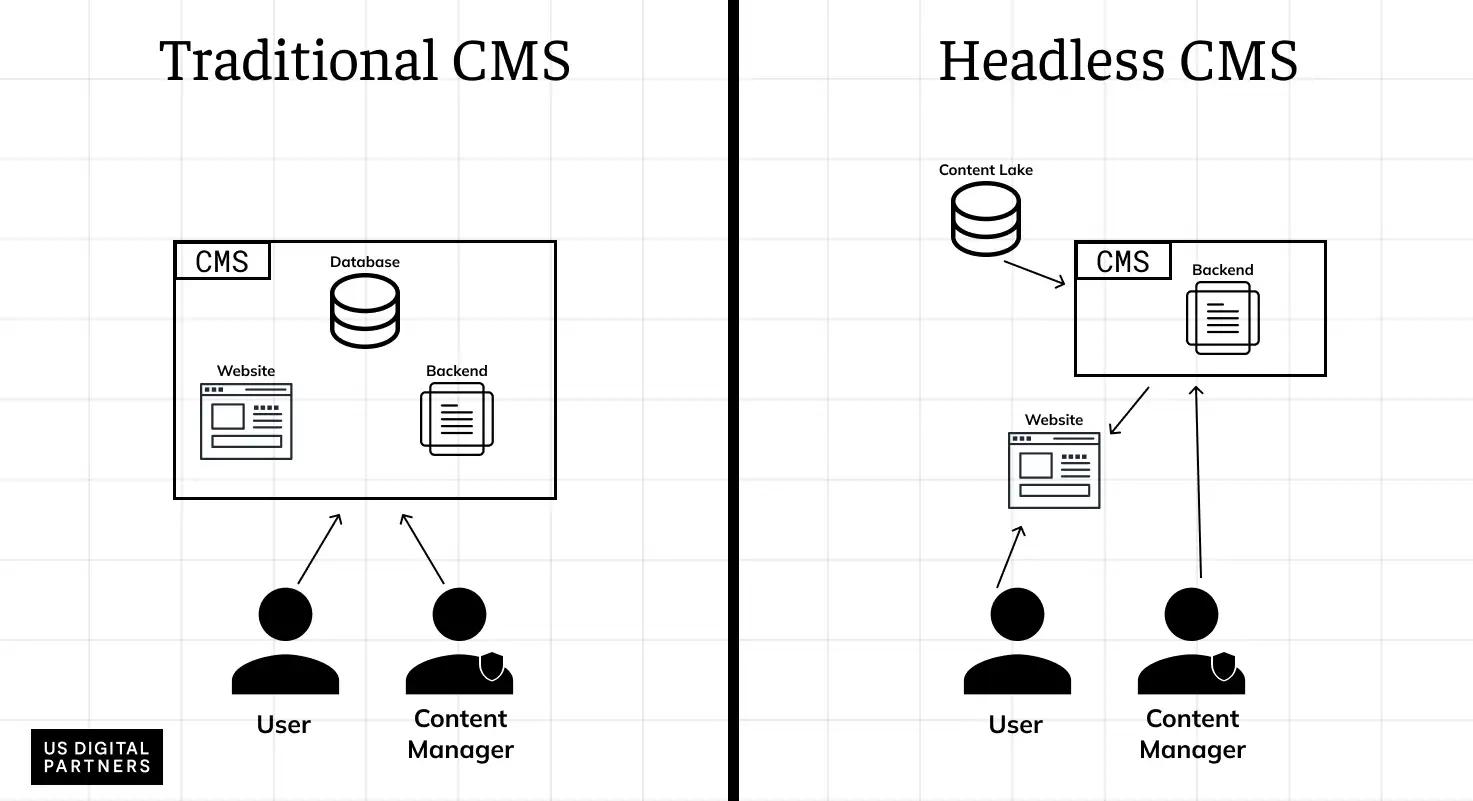
Headless CMSs get back to the root of content management by handling content and content only. Unlike a “traditional” CMS such as WordPress which encapsulates all parts of a website, a headless CMS exists separately from a website and only handles its content. The result is a more flexible backend experience designed specifically for content-focused marketing teams.
For a deeper dive into the advantages of a headless CMS, check out Sanity’s Headless CMS 101.
How is Sanity different from WordPress?
To put it simply, Sanity is simpler, lighter, and faster. As mentioned above, Sanity is a headless CMS and isn’t an all-encompassing platform like WordPress. While this may sound like a limitation, it is not. This gives marketers the flexibility to build the right site for their team. There is no need to adapt a company’s content marketing goals to fit the constraints of a rigid platform like WordPress.
How much does Sanity cost?
Sanity offers different plans that scale with your needs. A simple Sanity Studio can be built and hosted with Sanity’s free plan. Most companies or developers with growth goals are best served with Sanity’s $15/user/month Growth plan. Enterprise-level customers with expansive content, security, and distribution needs can work with a Sanity representative for customized pricing.
What development frameworks can be used with Sanity?
Sanity can be used with a variety of frameworks, but it is commonly used with many of the most popular modern Javascript frameworks, like Next/React, Vue, and Svelte/Sveltekit.
Does Sanity have a visual editor?
Yes. Presentation mode allows you to browse through the frontend of the website and make edits in a more intuitive fashion. Learn how presentation mode works.
Is Sanity good for Generative Engine Optimization (GEO) and AI-SEO?
Yes. GEO is heavily content-driven, so using Sanity’s Content Operating System is a large advantage compared to traditional CMSs. Learn more.
What is a Content Lake?
A Content Lake is Sanity’s alternative to a relational database. Rather than using a traditional table-oriented SQL database, Sanity’s Content Lake stores data in JSON as documents that don’t have to be molded into a table structure. The result is a flexible data storage solution made to meet the demands of the modern content-focused ecosystem. Learn more.
What is GROQ?
Graph-Relational Object Queries (GROQ) is Sanity’s proprietary query language used for pulling data from the Content Lake. See how it works.
Is Sanity able to be self-hosted?
Kind of. The Sanity Studio backend is able to be self-hosted, but the Content Lake where data is stored must be hosted by Sanity.
Can Sanity CMS be used for eCommerce?
Yes! While Sanity is not a traditional eCommerce platform and does not handle payment processing or shipping, many top retailers like Tecovas and MR MAVIS use Sanity as an essential piece of their online store experience. When easily integrated with platforms like Shopify or Big Commerce, Sanity gives content teams the tools they need to build convertible product pages. Learn more.
What notable brands run on Sanity?
Sanity is a common choice for companies that are embracing the future of content-first marketing including Tecovas, Shopify, Nike, and more.
Is Sanity right for everyone?
Sanity is best for forward thinking companies who have a content-first strategy and are supported by an in-house technology team or an agency.
Sanity – The Content Operating System that ends your CMS nightmares
Sanity replaces rigid content systems with a developer-first operating system. Define schemas in TypeScript, customize the editor with React, and deliver content anywhere with GROQ. Your team ships in minutes while you focus on building features, not maintaining infrastructure.
Sanity scales from weekend projects to enterprise needs and is used by companies like Puma, AT&T, Burger King, Tata, and Figma.